
Introducing ARS ARCANUM
Essays on publishing, writing, and speculative fiction.

I’m a book publisher, which means I spend a great deal of time thinking about work that never appears on the page. Editorial conversations that collapse a subplot. Production decisions that determine whether a book can exist at all. Revisions that improve a manuscript while making it less marketable, or more difficult to explain. These decisions rarely announce themselves to readers, yet they shape everything that follows. ARS ARCANUM exists to examine that hidden work as it unfolds.
Writing, editing, and publishing are often discussed in fragments: isolated advice, anecdotes, or abstractions removed from material conditions. What is less frequently addressed is how these practices function together over time, particularly in contexts where scale, infrastructure, and access differ from dominant publishing centres. This publication is a space for sustained attention to that work, approached as practice rather than opinion. It is concerned with how books are made, how decisions accumulate, and how constraints shape outcomes.
The title reflects this focus. Ars refers to practice, craft, and discipline: work learned through repetition and judgment rather than theory alone. Arcanum refers to what is interior or concealed. In publishing and writing, much of what determines quality and longevity is not immediately visible. Editorial decisions, structural revisions, production choices, and economic trade-offs rarely appear on the page, yet they determine what readers ultimately encounter. The “hidden” here is not mystical. It is procedural, structural, and often unspoken. ARS ARCANUM is concerned with making that work legible.
Speculative fiction is the primary lens through which this examination takes place. I work within the genre because it makes structural demands that are difficult to avoid. Worldbuilding, narrative systems, and thematic design must cohere across long spans of text, and their failures tend to be structural rather than cosmetic. Speculative fiction is frequently treated as either escapist or ‘lesser-than’ literature, and discussions around it often stop at genre conventions or market trends. I am interested in it as a serious mode of writing that exposes the consequences of craft decisions with unusual clarity.
The context in which this work takes place matters. Publishing in South Africa operates under different assumptions than those that dominate discussions originating in larger markets. Print runs are smaller. Distribution is uneven. Readerships are fragmented across geography, language, and access. These conditions shape what is viable, how risk is managed, and how success comes to be defined. In my own publishing work, decisions that might appear purely aesthetic elsewhere often carry logistical or economic weight here. ARS ARCANUM treats these constraints not as deficiencies to be overcome, but as material realities that inform practice.
The three arcana
This publication is focused on three specific arcana, or strands. The first is concerned explicitly with publishing practice. This includes editing, production, pricing, distribution, and the long timelines involved in building a catalogue and a readership. It also includes the less visible work of decision-making: what to publish, how to resource it, and how to sustain standards over time. These essays are written from within small-press work rather than from a theoretical distance. I am not interested in universal prescriptions. I am interested in describing processes as they are encountered, with attention to trade-offs, limitations, and unintended consequences. Publishing is treated here as a system, not an abstraction.
The second strand focuses on writing practice. Here, too, the emphasis is on structure and decision rather than motivation or productivity. Writing speculative fiction at scale requires sustained attention to form: narrative architecture, revision, worldbuilding, pacing, and coherence across long spans of text. Much of this work is slow and unglamorous. Drafts change under pressure. Promising ideas are abandoned. Constraints shape the finished text as much as inspiration. Writing is approached here as disciplined labour, inseparable from the conditions under which it is produced.
The third strand follows the making of a novel, Khala. I include this work here as a concrete case study. Writing a novel involves a long sequence of decisions, revisions, failures, and recalibrations that are difficult to discuss meaningfully in the abstract. By documenting aspects of this process in public, the discussions of craft and publishing elsewhere in this publication remain grounded in specific problems and outcomes. What is shared will include false starts, cuts, and structural changes, not as confessional material, but as part of examining how complex work is actually completed.
This publication assumes a reader willing to engage attentively. It is written for those who are interested in writing, publishing, or reading speculative fiction with care, and who are prepared to think about the systems that support or constrain that work. It is not designed as an instructional series, nor as commentary on industry news or trends. Disagreement is expected; certainty is treated with caution. The aim is not to persuade, but to clarify how particular practices function within particular conditions.
Essays will be published twice monthly. The pace is deliberate. ARS ARCANUM is conceived as an ongoing notebook; its value, if it has any, will emerge over time, through sustained attention to work that usually remains unseen.
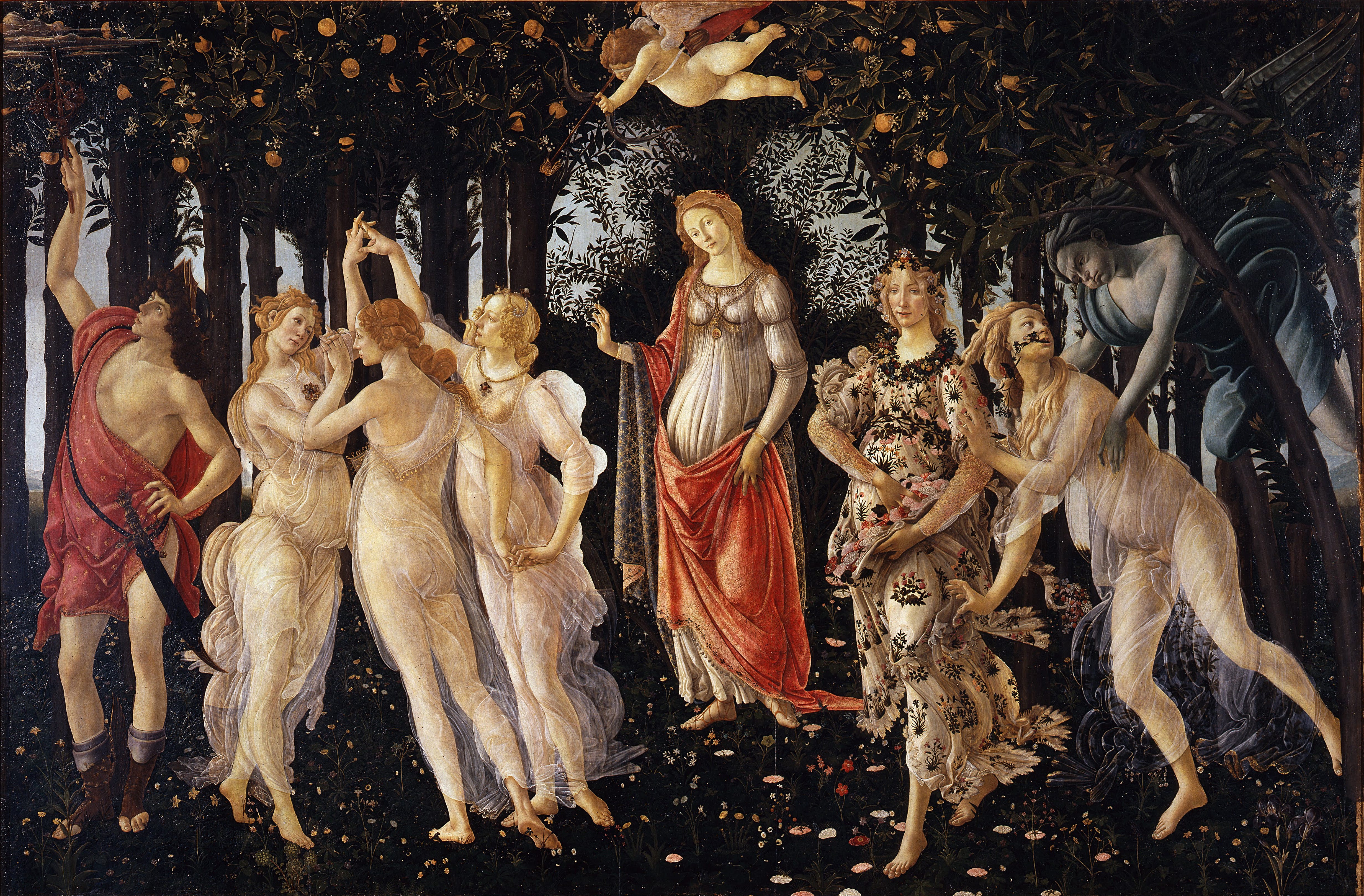
Lastly, I’ll end each essay with a piece of art that moves me. It has nothing to do with books, publishing or writing. I invite you to explore the art and the artist.
Piece I: Primavera by Sandro Botticelli.
So ready and excited for this!
Welcome!